Ingredients
500g Fish Fillets
2 tbsp Ghee
1 Onion, finely chopped
2 Garlic Cloves, finely chopped
1 tbsp Fresh Coriander, chopped
1 tbsp Fresh Mint, chopped
1 tsp Ground Cumin
1 tsp Tumeric
1 tsp Chilli Powder
1 Ripe Tomato, chopped
1 tsp Salt
1 1/2 tsp Garam Masala
Lemon Juice to taste
Method
Clean the fish and cut into large pieces.
Heat the ghee in a saucepan and on low heat fry the onion, garlic, coriander and mint until onion is soft and golden.
Add the cumin, turmeric and chili powder and stir until the spices are cooked.
Add the tomato, salt and garam masala, stirring, until tomato is cooked to a pulp.
Add lemon juice and check whether more salt is needed.
Place the pieces of fish into the sauce, spooning it over the fish. Cover and simmer for 10 minutes, or until fish is cooked.
Printable Version
more recipes
“Indian recipes that are easy to prepare and great for people on a diet„

Butter Chicken
Ingredients
1/2 cup Natural Yoghurt
1 tbsp Lemon Juice
1 tsp Turmeric
2 tsp Garam Masala Powder
1 tsp Chilli Powder
1 tsp Ground Cumin
2 tsp Fresh Ginger, Grated
2 Garlic Cloves, Crushed
4 Chicken Breasts, Chopped
125g Cashews, Roasted
60g Unsalted Butter
1 tbsp Sunflower Oil
1 Onoin, Finely Chopped
1 tsp Ground Cardamom
1 Cinnamon Stick
1 Bay Leaf
2 tsp Sweet Paprika
425g Can Crushed Tomato
150ml Chicken Stock
1 cup Thickened Cream
Method
Combine yoghurt, lemon juice, turmeric, garam masala, chilli, cumin, ginger and garlic in a bowl. Add chicken and stir well. Cover and refrigerate overnight.
Reserve half the cashews and place remaining cashews in a food processor. Process until finely ground.
Heat the butter and oil in a pan over medium heat. Add the onion, cardamom, cinnamon and bay leaf and cook for 2 minutes until the onion starts to soften.
Reduce heat to low, then add chicken and marinade, paprika, tomato puree, cashew powder and stock. Simmer for 15 minutes. Stir in cream and cook for a further 10 minutes.
Garnish with cashews, chopped coriander and serve with rice.
Printable Version
more recipes
“Indian recipes that are easy to prepare and great for people on a diet„
1/2 cup Natural Yoghurt
1 tbsp Lemon Juice
1 tsp Turmeric
2 tsp Garam Masala Powder
1 tsp Chilli Powder
1 tsp Ground Cumin
2 tsp Fresh Ginger, Grated
2 Garlic Cloves, Crushed
4 Chicken Breasts, Chopped
125g Cashews, Roasted
60g Unsalted Butter
1 tbsp Sunflower Oil
1 Onoin, Finely Chopped
1 tsp Ground Cardamom
1 Cinnamon Stick
1 Bay Leaf
2 tsp Sweet Paprika
425g Can Crushed Tomato
150ml Chicken Stock
1 cup Thickened Cream
Method
Combine yoghurt, lemon juice, turmeric, garam masala, chilli, cumin, ginger and garlic in a bowl. Add chicken and stir well. Cover and refrigerate overnight.
Reserve half the cashews and place remaining cashews in a food processor. Process until finely ground.
Heat the butter and oil in a pan over medium heat. Add the onion, cardamom, cinnamon and bay leaf and cook for 2 minutes until the onion starts to soften.
Reduce heat to low, then add chicken and marinade, paprika, tomato puree, cashew powder and stock. Simmer for 15 minutes. Stir in cream and cook for a further 10 minutes.
Garnish with cashews, chopped coriander and serve with rice.
Printable Version
more recipes
“Indian recipes that are easy to prepare and great for people on a diet„
Rogan Josh
Ingredients
500g Lamb, cubed
1 tbsp Coriander Seeds
1 tsp Poppy Seeds
1 tsp Cumin Seeds
4 Black Peppercorns
4 Cloves
1 in Cinnamon Stick
1 tsp Black Cardomom Seeds
1 tbsp Shredded Coconut
1 tbsp Ground Almond
1/2 tsp Ground Mace
1/2 tsp Grated Nutmeg
75 ml Vegetable Oil
1 tsp Onion Seeds
1 Onion, finely chopped
4 Cloves Garlic, crushed
1 in Ginger, finely chopped
3 Bay Leaves
1/2 tsp Ground Red Chilli
1/2 tsp Ground Turmeric
225g Canned Tomatoes
2/3 cup Natural Yoghurt
1 cup Water
Salt, to taste
Method
Heat a frying pan and fry the coriander, cumin and poppy seeds, the cloves, peppercorns, cinnamon and cardamom until golden. Cool then grind to a powder. Heat a pan and fry the coconut, almonds, mace and nutmeg until lightly browned.
Heat the oil in a heavy based pan and fry the onion seeds for 30 seconds. Add the onion, garlic, ginger and bay leaves and fry until golden brown.
Stir in the lamb and fry for 5 minutes. Stir in the roaster spices, the chilli, turmeric and salt then add the tomatoes and cook until all the liquid has been absorbed and the oil appears on the surface.
Add the yoghurt and cook until all the liquid has been absorbed. Add the water, bring to the boil. Cover and cook over a low heat for 10 minutes, until the meat is tender.
Printable Version
more recipes
“Indian recipes that are easy to prepare and great for people on a diet„
500g Lamb, cubed
1 tbsp Coriander Seeds
1 tsp Poppy Seeds
1 tsp Cumin Seeds
4 Black Peppercorns
4 Cloves
1 in Cinnamon Stick
1 tsp Black Cardomom Seeds
1 tbsp Shredded Coconut
1 tbsp Ground Almond
1/2 tsp Ground Mace
1/2 tsp Grated Nutmeg
75 ml Vegetable Oil
1 tsp Onion Seeds
1 Onion, finely chopped
4 Cloves Garlic, crushed
1 in Ginger, finely chopped
3 Bay Leaves
1/2 tsp Ground Red Chilli
1/2 tsp Ground Turmeric
225g Canned Tomatoes
2/3 cup Natural Yoghurt
1 cup Water
Salt, to taste
Method
Heat a frying pan and fry the coriander, cumin and poppy seeds, the cloves, peppercorns, cinnamon and cardamom until golden. Cool then grind to a powder. Heat a pan and fry the coconut, almonds, mace and nutmeg until lightly browned.
Heat the oil in a heavy based pan and fry the onion seeds for 30 seconds. Add the onion, garlic, ginger and bay leaves and fry until golden brown.
Stir in the lamb and fry for 5 minutes. Stir in the roaster spices, the chilli, turmeric and salt then add the tomatoes and cook until all the liquid has been absorbed and the oil appears on the surface.
Add the yoghurt and cook until all the liquid has been absorbed. Add the water, bring to the boil. Cover and cook over a low heat for 10 minutes, until the meat is tender.
Printable Version
more recipes
“Indian recipes that are easy to prepare and great for people on a diet„
Lamb Korma
Lamb Korma
Cooking time: 2 hours
Serving: 4
Ingredients
500g Lamb, cubed
4 tbsp Natural Yogurt
3 Onions, chopped
2 Cloves Garlic, chopped
3 cm Ginger
3 tbsp Ghee
8 Black Peppercorns, crushed
4 Green Cardamom pods, coarsley crushed
2 Cloves, crushed
1 tsp Chilli Powder
2 tsp Ground Coriander
2 cup Water
Salt, to taste
Fresh Coriander, chopped
Method
Place 2 of the onions, garlic and ginger in a blender or food processor and blend to a smooth paste.
Heat the ghee in a wok. Add the remaining roughly chopped onion, and stirring frequently, fry to a pale golden colour. Add the crushed spices, salt and lamb. Stirring constantly fry the meat for 5 to 8 minutes to a rich brown colour. The ghee will start to separate at this stage.
Add the ground onion paste. Continue to stir for another 10 minutes until the mixture is well browned.
Add the chilli powder and ground coriander. Stir well, then add the yoghurt 1 tablespoon at a time stirring continuously, fry until the ghee again starts to separate.
Soon after this the sauce or the masala will start to stick to the bottom of the pan. Add the water at this stage. Mix well.
Cover with a tight fitting lid, reduce the heat and simmer for 1 1/2 hours or until the meat is tender and the sauce has thickened. Transfer to a serving dish sprinkle with fresh coriander.
Printable Version
more recipes
“Indian recipes that are easy to prepare and great for people on a diet„
Cooking time: 2 hours
Serving: 4
Ingredients
500g Lamb, cubed
4 tbsp Natural Yogurt
3 Onions, chopped
2 Cloves Garlic, chopped
3 cm Ginger
3 tbsp Ghee
8 Black Peppercorns, crushed
4 Green Cardamom pods, coarsley crushed
2 Cloves, crushed
1 tsp Chilli Powder
2 tsp Ground Coriander
2 cup Water
Salt, to taste
Fresh Coriander, chopped
Method
Place 2 of the onions, garlic and ginger in a blender or food processor and blend to a smooth paste.
Heat the ghee in a wok. Add the remaining roughly chopped onion, and stirring frequently, fry to a pale golden colour. Add the crushed spices, salt and lamb. Stirring constantly fry the meat for 5 to 8 minutes to a rich brown colour. The ghee will start to separate at this stage.
Add the ground onion paste. Continue to stir for another 10 minutes until the mixture is well browned.
Add the chilli powder and ground coriander. Stir well, then add the yoghurt 1 tablespoon at a time stirring continuously, fry until the ghee again starts to separate.
Soon after this the sauce or the masala will start to stick to the bottom of the pan. Add the water at this stage. Mix well.
Cover with a tight fitting lid, reduce the heat and simmer for 1 1/2 hours or until the meat is tender and the sauce has thickened. Transfer to a serving dish sprinkle with fresh coriander.
Printable Version
more recipes
“Indian recipes that are easy to prepare and great for people on a diet„
Theeyal recipe
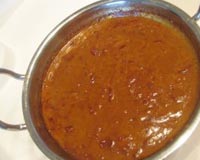
Ingredients
1 cup Baby onions
5-6 nos. Curry leaves 1/2 teaspoon Mustard seeds
2 tablespoons Tamarind paste
1/2 teaspoon Sugar
1 pinch Asafoetida
1/2 cup Grated coconut
7 nos. Red chillies
1 tablespoon Coriander seeds
1/4 teaspoon Cumin seeds
7-8 nos. Black peppercorns
1/4 teaspoon Turmeric powder
3 tablespoons Oil
Salt
Preparation
Heat 1 tbsp. oil in a small pan and saute coconut till it is light brown. Add 5 red chillies, coriander seeds, cumin seeds, peppercorns and fry till it emits an aroma. Add the turmeric powder. Stir-fry for 2-3 seconds. Keep aside to cool. Grind into a coarse powder.
Heat 2 tbsp. oil and add the mustard seeds, curry leaves and remaining red chillies. When the seeds start spluttering, add asafoetida and onions. Saute for 5 minutes on a medium flame. Add the ground masala powder and cook for a few seconds. Add water, tamarind extract, salt and sugar and bring to a boil. Simmer for 5-7 minutes. Serve hot with steamed rice.
CUCUMBER PACHADI RECIPE

Ingredients:
2 small sized cucumber (kheera)
1/2 inch ginger (adrak)
2-3 green chillies
2 tblsp coconut (narial) (scraped, optional)
1 1/2 cups yogurt
1 tsp oil (tel)
1/2 tsp mustard seeds (raai)
5-6 curry leaves (kari patta)
2 red chillies whole
salt (namak) to taste
How to make cucumber pachadi:
Wash and scrub cucumbers thoroughly and then grate with the skin.
Pour yogurt (made of skimmed milk) into a clean muslin cloth and hang it for half an hour, preferably in a cool place.
Peel, wash and finely chop ginger. Wash green chillies, remove stem and finely chop.
Grind together scraped coconut, green chillies and ginger to a fine paste.
Mix together the grated cucumber, ground coconut masala and yogurt. Add salt to taste.
Heat oil in a small pan, add mustard seeds. When they start to crackle, add curry leaves, whole red chillies broken into two, stir for a moment.
Pour it on to the yogurt mixture. Stir it thoroughly.
Serve chilled.
Sambar Recipe
This Sambar recipe is one of the most loved dishes in South Indian cuisine. It accompanies most every meal. In South India, there are variations to this sambar recipe, but this is the one I use.
Ingredients:
1/2 lime sized ball Tamarind
1 cup Toor Dal (or red lentils)
1/2 teaspoon Turmeric Powder
2 teaspoons oil
Salt to taste
5 small dry red chilies (or to taste)
8 Curry Leaves (see note)
1 medium onion (shallots are preferable)
1/2 teaspoon mustard seeds
1/4 tsp asafoetida (optional)
1/2 teaspoon fenugreek seeds
1 large tomato
2 tablespoons sambar powder (see note)
1/4 cup chopped cilantro leaves (also known as coriander leaves)
1 cup of a vegetable of your choice like green beans, chopped carrot
Directions:
Soak the tamarind in 1 cup water for 20 minutes. Squeeze it out, adding water little by little to prepare 1 cup of juice.
Choose a heavy cooking pot. Wash and clean the dal. Boil 2 cups of water and add the dal, turmeric powder and 1 teaspoon of oil. As the dal boils, skim off the foam and discard. Boil until the dal is soft and then mash it coarsely. If needed, add more water as it is boiling but do not let it get too watery. If you use a pressure cooker it will take about 5 minutes.
In a separate pan, heat to medium and pour in the remaining oil. Once the oil is hot, add the chilies, mustard seeds, fenugreek and curry leaves and sauté for 2 minutes. Add the onion and brown lightly. Add the tamarind extract and let boil lightly until the onions are cooked. Add this mixture to the dal with asafoetida, tomato, vegetable of choice and sambar powder. Allow this to boil for 5 to 10 minutes and remove from the heat. Garnish with cilantro.
A Note on Ingredients:
Curry Leaves
Curry leaves are found in tropical climates. They add a wonderful piquancy to the Sambar recipe. I you do not have curry leaves do not substitute something else. They can be found in specialty shops that have Indian foods.
Sambar Powder
High quality Sambar powders can be bought pre-mixed at the store. If you do not have that available you can make it yourself by adding the following ingredients:
1/2 cups coriander seeds
1/2 cups red chilies (or to taste
1/8 cup Bengal gram
1 Tbsp. cumin seeds
1 Tbsp. pepper corn
1/2 tsp mustard seeds
1 pinch of cinnamon
1 pinch ground clove
1/2 tsp. Turmeric powder
Traditionally, these ingredients would be broiled separately and ground and stored. Use pre-ground if you desire.
Tamarind
is one of the unique ingredients found in South India. It gives a sour taste to the sambar recipe and it can be found in different forms. The most common way to find it is in packages where the tamarind seeds are compacted together. To use it in a dish like this sambar recipe, take a piece off and soak it in water. The size of the piece will be indicated in the recipe. After it has soaked for 2 hours squeeze it between your fingers to extract the juice and discard the pith and seeds. Tamarind can be found in specialty stores in your area or shop online for ingredients for this sambar recipe.
Ingredients:
1/2 lime sized ball Tamarind
1 cup Toor Dal (or red lentils)
1/2 teaspoon Turmeric Powder
2 teaspoons oil
Salt to taste
5 small dry red chilies (or to taste)
8 Curry Leaves (see note)
1 medium onion (shallots are preferable)
1/2 teaspoon mustard seeds
1/4 tsp asafoetida (optional)
1/2 teaspoon fenugreek seeds
1 large tomato
2 tablespoons sambar powder (see note)
1/4 cup chopped cilantro leaves (also known as coriander leaves)
1 cup of a vegetable of your choice like green beans, chopped carrot
Directions:
Soak the tamarind in 1 cup water for 20 minutes. Squeeze it out, adding water little by little to prepare 1 cup of juice.
Choose a heavy cooking pot. Wash and clean the dal. Boil 2 cups of water and add the dal, turmeric powder and 1 teaspoon of oil. As the dal boils, skim off the foam and discard. Boil until the dal is soft and then mash it coarsely. If needed, add more water as it is boiling but do not let it get too watery. If you use a pressure cooker it will take about 5 minutes.
In a separate pan, heat to medium and pour in the remaining oil. Once the oil is hot, add the chilies, mustard seeds, fenugreek and curry leaves and sauté for 2 minutes. Add the onion and brown lightly. Add the tamarind extract and let boil lightly until the onions are cooked. Add this mixture to the dal with asafoetida, tomato, vegetable of choice and sambar powder. Allow this to boil for 5 to 10 minutes and remove from the heat. Garnish with cilantro.
A Note on Ingredients:
Curry Leaves
Curry leaves are found in tropical climates. They add a wonderful piquancy to the Sambar recipe. I you do not have curry leaves do not substitute something else. They can be found in specialty shops that have Indian foods.
Sambar Powder
High quality Sambar powders can be bought pre-mixed at the store. If you do not have that available you can make it yourself by adding the following ingredients:
1/2 cups coriander seeds
1/2 cups red chilies (or to taste
1/8 cup Bengal gram
1 Tbsp. cumin seeds
1 Tbsp. pepper corn
1/2 tsp mustard seeds
1 pinch of cinnamon
1 pinch ground clove
1/2 tsp. Turmeric powder
Traditionally, these ingredients would be broiled separately and ground and stored. Use pre-ground if you desire.
Tamarind
is one of the unique ingredients found in South India. It gives a sour taste to the sambar recipe and it can be found in different forms. The most common way to find it is in packages where the tamarind seeds are compacted together. To use it in a dish like this sambar recipe, take a piece off and soak it in water. The size of the piece will be indicated in the recipe. After it has soaked for 2 hours squeeze it between your fingers to extract the juice and discard the pith and seeds. Tamarind can be found in specialty stores in your area or shop online for ingredients for this sambar recipe.
Fish Curry with Kodambuly recipe

Ingredients
King Fish 250 grams Cleaned
Kodampuli 3 or 4 Boil in water
Curry Leaves Small bunch
Red Chilli Powder 3 teaspoons
Turmeric Powder 1/4 teaspoon
Fenugreek 1/4 teaspoon
Coconut Oil 2 tablespoon
Ginger 1 1/2 inch piece
Garlic 3 cloves
Salt To taste
Mustard Seeds A Pinch
| Preparation | |
| Remove the skin, and cut the fish into 1 x 2 inch size rectangular pieces, clean well, drain and keep aside. Grind the red chilli powder, turmeric powder, ginger, and garlic with little water, to make a smooth paste. Heat oil in a pan, put the mustard seeds, and when they start sputtering, add the curry leaves, and the grinded paste. Fry the paste at a medium heat, till the paste becomes consistent. Add the water containing the extract of Kodampuli, check the level of sourness. When the water starts boiling add the fish pieces, and salt. Add water enough to cover the pieces. Cook at a gentle heat. Keep stirring lightly (to avoid breaking of fish) in between, or just shake the pan. When the pieces are almost cooked, increase the heat and cook till the gravy thickens, and the oil is visible. |
Kerala Chicken Curry recipe
Ingredients
15 medium sized pieces (about 800 grams) of chicken
2 medium onion(s) sliced
2 cup(s) grated coconut
8 cloves garlic
1 tablespoon(s) each of coriander and red chilli powders
1 tablespoon(s) juliennes of ginger
2 green chilli(es) slit
2 whole red chilli(es)
1 teaspoon(s) turmeric powder
12 curry leaves
2 tablespoon(s) oil
2 cup(s) water
salt to taste
finely chopped coriander leaves for garnishing (optional)
15 medium sized pieces (about 800 grams) of chicken
2 medium onion(s) sliced
2 cup(s) grated coconut
8 cloves garlic
1 tablespoon(s) each of coriander and red chilli powders
1 tablespoon(s) juliennes of ginger
2 green chilli(es) slit
2 whole red chilli(es)
1 teaspoon(s) turmeric powder
12 curry leaves
2 tablespoon(s) oil
2 cup(s) water
salt to taste
finely chopped coriander leaves for garnishing (optional)
The Different Kind of Cooking TV Shows
Cooking shows have proved to be quite an effective method of driving the ratings up for a network. The premise of cooking TV shows is fairly simple. You find a great chef, create a kitchen for him or her, place the chef in the kitchen and have him or her prepare mouthwatering dishes. Many people may think that this is boring and that itll hardly work, but numerous shows have proven them wrong.
Reality Cooking TV Shows
Cooking shows are popular. In fact, they are one of the most popular daytime shows. People generally love the idea that these shows have to offer. With the popularity of reality shows, reality cooking TV shows are inevitable. Combining reality TV and cooking is actually brilliant because this removes the boring factor associated to cooking by people who are not actually interested in the art. Reality cooking shows effectively introduce cooking to people who are looking for edgier programs. The idea is this even if you dont like to cook, youd still get entertained. People get hooked, not by the actual cooking, but by the excitement the show generates. People come back week after week just to see what will happen next.
This is why people cringed at Chef Gordon Ramseys explosive character combined with his penchant for cursing, but they cannot wait to come back for more. They generally love to watch the contestants withering under his livid stare and cringing every time Chef Ramsey opens his mouth to release a fresh string of tirades. People are ironically sympathetic at his attempts to mold the participants into professional chefs. It doesnt matter if they are learning any cooking tips. What matters is that they are entertained. Obviously, this is what you will find from every cooking show these days entertainment.
Competing at Cooking TV Shows
Most reality cooking TV shows take the form of a competition or contests where participants are given cooking tasks every week. The show will then eliminate the bad would-be chefs from the rest. Not surprisingly, people find themselves rooting for a contestant. Inevitably, they also find themselves returning for more.
Of course there are some people who are fascinated with cooking shows because of the meal preparation itself. Dishes are seemingly prepared with the least bit of effort exerted. There are some people who find the chef hosts entertaining while other people find themselves fascinated by the high-tech cookware and tools. Many of the chefs featured in cooking TV shows have not received formal culinary education and this effectively inspires many viewers. The idea is this if these chefs can create delectable dishes without formal education then people can also create amazingly delicious dishes while at home. Regardless of the reason behind peoples fascination, it cannot be denied that cooking TV shows are already a part of daily television viewing.
The Regular Cook-at-Home Show
If you are not a fan of reality TV or competitive cooking shows, you can still watch the regular cooking home shows where basically the theme is all about learning how to cook basic dishes. These kinds of cooking TV shows cater to stay-at-home moms and busy people who still prefer home-cooked meals despite their busy schedules. Often, the host chef will teach you how to whip up delicious meals within minutes. Often the network banks on the personality of the host chef to attract viewers and drive ratings.
Gourmet Cooking TV Shows
If you want to learn how to cook fancy dishes, there are cooking TV shows that feature gourmet chefs who will teach you how to create simple haute cuisine dishes. This is a nice way of attracting people who would like to sample 5-star restaurant dishes, but are hesitant to waste hundreds of dollars on a meal. These kinds of shows can be complicated because the recipes are not simple. Usually, these ingredients are not easily available. You would likely wonder, Where can I possibly get these ingredients? However, a good host chef will give you ideas where to find the ingredients or what alternatives you can use in case you cant find a particular ingredient.
The bottom line is that there are several cooking TV shows available for everyone. You can always choose which show you prefer. One thing you are assured though from these shows is that you will learn and you will be entertained.
Reality Cooking TV Shows
Cooking shows are popular. In fact, they are one of the most popular daytime shows. People generally love the idea that these shows have to offer. With the popularity of reality shows, reality cooking TV shows are inevitable. Combining reality TV and cooking is actually brilliant because this removes the boring factor associated to cooking by people who are not actually interested in the art. Reality cooking shows effectively introduce cooking to people who are looking for edgier programs. The idea is this even if you dont like to cook, youd still get entertained. People get hooked, not by the actual cooking, but by the excitement the show generates. People come back week after week just to see what will happen next.
This is why people cringed at Chef Gordon Ramseys explosive character combined with his penchant for cursing, but they cannot wait to come back for more. They generally love to watch the contestants withering under his livid stare and cringing every time Chef Ramsey opens his mouth to release a fresh string of tirades. People are ironically sympathetic at his attempts to mold the participants into professional chefs. It doesnt matter if they are learning any cooking tips. What matters is that they are entertained. Obviously, this is what you will find from every cooking show these days entertainment.
Competing at Cooking TV Shows
Most reality cooking TV shows take the form of a competition or contests where participants are given cooking tasks every week. The show will then eliminate the bad would-be chefs from the rest. Not surprisingly, people find themselves rooting for a contestant. Inevitably, they also find themselves returning for more.
Of course there are some people who are fascinated with cooking shows because of the meal preparation itself. Dishes are seemingly prepared with the least bit of effort exerted. There are some people who find the chef hosts entertaining while other people find themselves fascinated by the high-tech cookware and tools. Many of the chefs featured in cooking TV shows have not received formal culinary education and this effectively inspires many viewers. The idea is this if these chefs can create delectable dishes without formal education then people can also create amazingly delicious dishes while at home. Regardless of the reason behind peoples fascination, it cannot be denied that cooking TV shows are already a part of daily television viewing.
The Regular Cook-at-Home Show
If you are not a fan of reality TV or competitive cooking shows, you can still watch the regular cooking home shows where basically the theme is all about learning how to cook basic dishes. These kinds of cooking TV shows cater to stay-at-home moms and busy people who still prefer home-cooked meals despite their busy schedules. Often, the host chef will teach you how to whip up delicious meals within minutes. Often the network banks on the personality of the host chef to attract viewers and drive ratings.
Gourmet Cooking TV Shows
If you want to learn how to cook fancy dishes, there are cooking TV shows that feature gourmet chefs who will teach you how to create simple haute cuisine dishes. This is a nice way of attracting people who would like to sample 5-star restaurant dishes, but are hesitant to waste hundreds of dollars on a meal. These kinds of shows can be complicated because the recipes are not simple. Usually, these ingredients are not easily available. You would likely wonder, Where can I possibly get these ingredients? However, a good host chef will give you ideas where to find the ingredients or what alternatives you can use in case you cant find a particular ingredient.
The bottom line is that there are several cooking TV shows available for everyone. You can always choose which show you prefer. One thing you are assured though from these shows is that you will learn and you will be entertained.
cookary
Cooking - Recipes - India - IndiaExpress.Com
Indian Cooking - Curry, Recipe , Kababs, Tikka, Mutton, Chicken, Egg ... Continental & Indian Cooking ... home > cooking > Recipes by Category; Hot Picks; Chicken; Murgh Ke Shami ~ Chicken Shorba ~ Fruit and Chicken Salad ~ Tandoori Chicken ~ Murgh Kaali Mirch ~ Butter Chicken ~ Curried Chicken ~ more...;
www.indiaexpress.com/cooking/ www.indiaexpress.com/cooking/
Indian Cooking - Curry, Recipe , Kababs, Tikka, Mutton, Chicken, Egg ... Continental & Indian Cooking ... home > cooking > Recipes by Category; Hot Picks; Chicken; Murgh Ke Shami ~ Chicken Shorba ~ Fruit and Chicken Salad ~ Tandoori Chicken ~ Murgh Kaali Mirch ~ Butter Chicken ~ Curried Chicken ~ more...;
www.indiaexpress.com/cooking/ www.indiaexpress.com/cooking/
Subscribe to:
Comments (Atom)